For Grant-Makers & Institutional Partners
Building the Infrastructure That Changes What's Possible
Project Trinitē connects the world’s most remote communities to the global AI economy — by installing the solar-powered digital infrastructure, training, and opportunity pathways that make it real.
Our Story
Born at the Intersection of Two Global Shifts
In 2020, two things happened simultaneously that would change what was possible for remote communities worldwide.
Starlink made high-speed satellite internet accessible in places that had never had reliable connectivity. And COVID accelerated the global shift to remote work — proving, almost overnight, that geography no longer had to determine who could participate in the digital economy.
Project Trinitē was founded on that insight. If the barriers were infrastructure and access — not talent, not intelligence, not work ethic — then the solution wasn’t charity. It was installation.
We began by asking a straightforward question: what would it take to plug a remote community directly into the global economy? Not with a training program that ends. Not with a donation that runs out. But with permanent infrastructure — reliable power, continuous connectivity, professional workspaces, and an ongoing platform for learning and production.
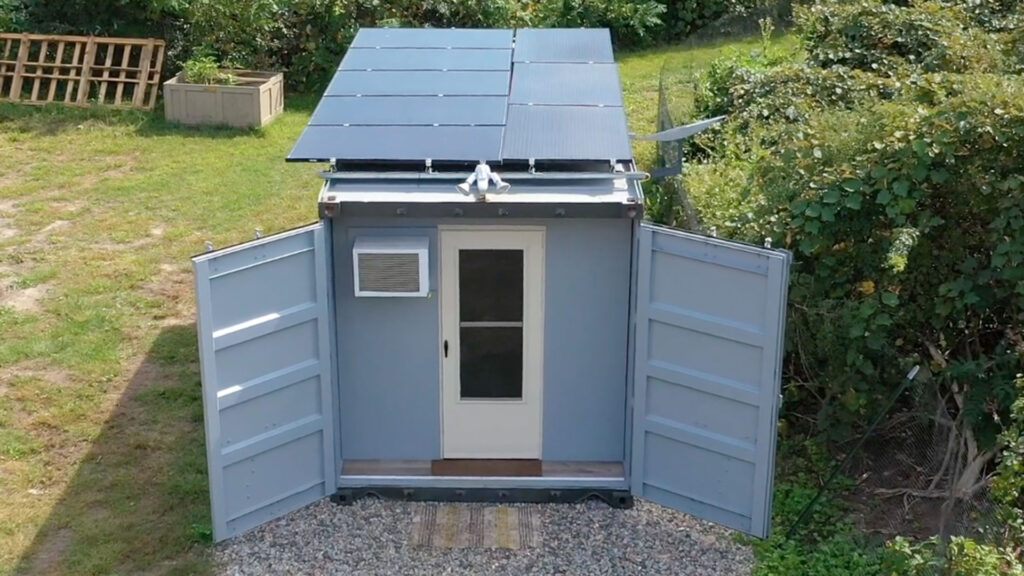
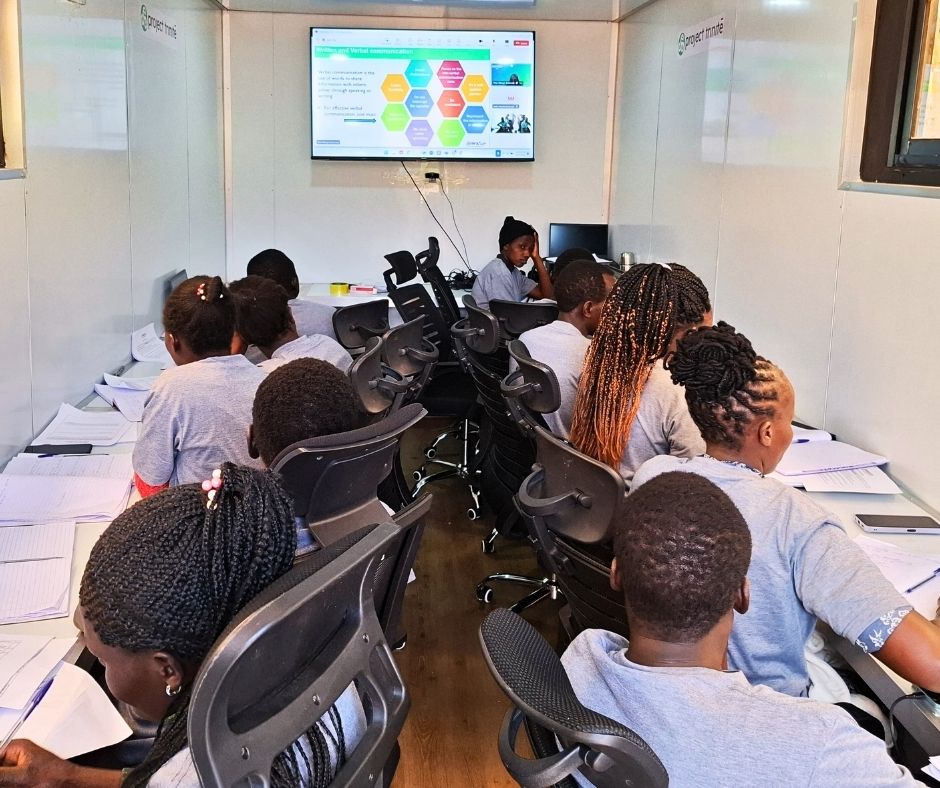
The answer became the Portable Online Development center — the POD. Each POD is a self-contained economic hub: solar-powered, Starlink-connected, professionally equipped, and designed to generate real income for the community it serves. Today, the David Connor Trinitech Center in Kenya — our flagship 100-person facility — stands as proof that the model works at scale.
Project Trinitē now operates across Kenya and Haiti, with 40+ trained Associates delivering services to U.S. clients, a 100% graduation rate, and a path to 1,000+ Associates within three to five years. We are not bridging the digital divide. We are installing the bridge.
On the Ground
We Don't Just Bridge the Digital Divide. We Install the Bridge.
Every Trinitē hub begins with the infrastructure that makes real economic participation possible: solar power, Starlink connectivity, and secure professional workspaces installed in communities where none of this has existed before. From that foundation, associates move through AI-assisted, self-paced training built for the modern digital economy — not simulations, but real project-based work that develops AI-native skills and generates income from day one. Infrastructure enables training. Training enables employment. Employment funds the next hub.
Solar Power
Reliable, renewable energy independent of unstable local grids — ensuring Associates can work without interruption, around the clock.
Starlink Connectivity
24/7 high-speed satellite internet in communities where broadband has never reached — the foundation of everything that follows.
Secure Workspaces
Professional-grade computing environments with secure access, privacy protection, and the tools needed for real client work.
AI-Native Training Platform
An asynchronous, self-paced capability development system with personalized learning paths, real project outputs, and continuous re-skilling — built for an economy where tools evolve fast.
Proof of Concept
The David Connor Trinitech Center
Opened February 14, 2026, in Kenya, the David Connor Trinitech Center is Project Trinitē’s flagship training and production facility — a 100-person hub that demonstrates what the POD model looks like at full scale. It is not a classroom. It is a working economic engine, where Associates train, collaborate, and deliver professional services to clients around the world.
The Trinitech Center proves that infrastructure can mature, production capacity can expand, and sustainable operations are achievable — and it serves as the template for every hub that follows.
100-Person Capacity
Opened February 2026
Nairobi, Kenya
Organizational Credentials
Structure, Governance, and Accountability
Project Trinitē Corp was incorporated as a 501(c)(3) nonprofit organization with a governance structure designed for transparency, accountability, and long-term institutional credibility. The organization is led by an Executive Director, overseen by a Board of Directors, and supported by a nine-member Advisory Council spanning operations, architecture, media, healthcare, and regional development.
The David Connor Trinitech Center — Project Trinitē’s flagship 100-person training and production facility — opened in February 2026 in Kenya, marking the transition from pilot program to permanent infrastructure.
- Legal Name: Project Trinitē Corp
- Status: 501(c)(3) Public Charity
- Tax ID: 93-3674252
- Headquarters: United States
- Active Regions: Kenya · Haiti
- Contact: hello@projecttrinite.org · +1 (617) 419-0075
- Flagship Facility: David Connor Trinitech Center, Kenya (opened Feb. 14, 2026)
Leadership & Governance
Experienced Leadership. Accountable at Every Level.
Dave Connor
Executive Director
Dave Connor brings over 25 years of executive leadership experience in strategic planning, project management, and cross-functional operations. Prior to Project Trinitē, he served as Executive Producer and Director of Operations, leading large-scale logistics and production initiatives for major organizations. He is the founding operational architect of the David Connor Trinitech Center, Project Trinitē’s flagship 100-person facility that opened in February 2026.
Jim Goldenberg
President, Board of Directors
Jim Goldenberg is a founder and partner at Cathartes, a Boston-based real estate investment firm, and holds an MBA from Columbia University. A recognized leader in sustainable development, he is an active member of the Urban Land Institute and Smart Growth America, and was nominated for Ernst & Young’s Entrepreneur of the Year. He also serves on the Board of Directors for the Saint Rock Haiti Foundation.
Matt Glynn
Vice President, Board of Directors
Matt Glynn is a distinguished entrepreneur with over three decades of executive leadership at Glynn Electric, one of New England’s premier industrial electrical contracting firms, which he built to more than 300 employees. He serves as President of the Board of Directors for the Boys & Girls Club of Plymouth and sits on the board of the E3 Initiative in Africa — reflecting a long-standing commitment to workforce development and global service.
Regional Leadership
Leading the Mission in the Field
Project Trinitē’s Regional Directors provide on-the-ground leadership in each hub community — managing Associate cohorts, building local partnerships, and ensuring the model delivers on its promise.
Marko Cheseto
Director | East Africa
Christian Tribié
Regional Director | Haiti
Sinatra Matimelo
Regional Director | South Africa
Martin Kariwokal
Project Manager | Kenya
Brégard Anderson Dorcé
Project Manager | Haiti
Alexandra Jolibois
Project Manager | Haiti
Milca Titika
Project Manager | Kenya
Officers
- Dave Connor — CEO | Executive Director
- Jim Goldenberg — President
- Matt Glynn — Vice President
- Gary Simon— Treasurer
- Marko Cheseto — Clerk
Advisory Council
- Barbi Connor — Director Employee Relations
- Tracy Copp — Training Leader
- J. Kenes Eloy — MD Field Consultant, Haiti
- Allison Farquharson — Creative Director
- Gerard Georges — Architecture
- Karen Glynn — Marketing
- Alex Gomes — Architecture
- Rick Holden — Impact Leader
- Jonathan Jacobs — Impact Leader
- Jake Jaros — Operations Director
- Benjamin Kilelan — Operations Director
- Sinatra Matimelo — Regional Director, South Africa
- Gary Simon — Director Strategic Partnerships
- Julie Thompson — Communications Director
Get Involved
Ready to Be Part of This?
Whether you want to support the mission, hire our Associates, or partner with us at an institutional level — there’s a place for you in the Project Trinitē ecosystem.